

The Longevity Vitamin: Why Mushrooms Deserve a Place on Your Plate
Updated: May 27
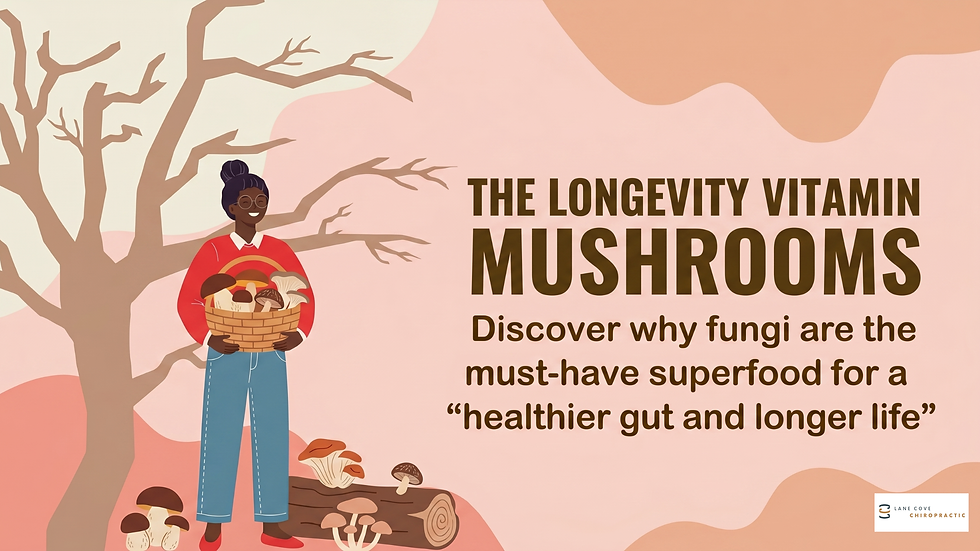
When most people think about healthy eating, they picture colourful vegetables, berries, leafy greens, and salads. But there is another food group quietly building a strong reputation in nutrition science:
Mushrooms.
Professor Tim Spector recently highlighted why mushrooms may deserve far more attention, especially for people interested in gut health, healthy ageing, recovery, and inflammation. And the science is surprisingly impressive.
Mushrooms Are Not Really Vegetables
Mushrooms belong to an entirely different biological kingdom called fungi. Interestingly, fungi are genetically closer to humans than plants.
Unlike vegetables, mushrooms contain a unique fibre called chitin. This fibre acts as food for your gut microbes, helping support the complex ecosystem of bacteria linked to digestion, immune health, inflammation control, and even brain function. This is one reason mushrooms are attracting so much interest in gut health research.
The “Longevity Vitamin”
One of the most fascinating compounds in mushrooms is something called ergothioneine, often shortened to ET. ET is a powerful antioxidant that your body cannot produce on its own—you must get it from food.
What makes this even more interesting is that humans have developed a special transport system specifically designed to move ergothioneine around the body. Researchers believe this suggests it plays an important role in protecting our cells from damage. Some scientists have even nicknamed it “the longevity vitamin” because ET appears to help:
Reduce oxidative stress
Support immune function
Help regulate inflammation
Protect tissues from cellular damage
These are all processes closely linked with ageing and chronic disease.
Which Mushrooms Are Best?
Not all mushrooms contain the same amount of ergothioneine. Here is how they stack up:
Highest levels: Porcini mushrooms
Excellent sources: Oyster and Shiitake mushrooms
Even standard button mushrooms still provide valuable nutrients, making them one of the few non-animal food sources of Vitamin D, alongside:
B vitamins
Selenium
Fibre
Protein
Pro Tip from Professor Spector: Leave your mushrooms on a sunny windowsill for a few hours before cooking. Their Vitamin D content increases significantly!
What Does the Research Show?
The research is still developing, but the findings are promising:
Prostate Health: One large Japanese study involving more than 36,000 men found that higher mushroom consumption was linked to a lower risk of prostate cancer.
Breast Health: Other studies and meta-analyses have suggested possible protective effects regarding breast cancer risk in women.
Cancer Treatment Support: Researchers have looked at medicinal mushrooms, such as Reishi, alongside cancer treatment. A Cochrane review examining five clinical trials found that Reishi supplementation appeared to improve clinical response rates in some cancer patients receiving chemotherapy, possibly by supporting immune function.
Note: Researchers point out that more high-quality studies are still needed to fully confirm these findings.
Why This Matters for Active Adults
For many, health is not only about avoiding disease. It is about staying active, recovering well, reducing inflammation, and maintaining energy and performance as you age.
This is where mushrooms become interesting. Their unique nutritional profile makes them a smart addition to the diet of active adults, runners, CrossFit athletes, and anyone trying to stay healthy long-term. They provide a powerhouse combination of:
Fibre for gut health
Antioxidants
Anti-inflammatory compounds
Immune support nutrients
How to Get More Mushrooms Into Your Diet
Adding mushrooms to your routine is easy. Try these simple ideas:
Fold them into morning omelettes
Roast them with olive oil and garlic
Toss shiitake mushrooms into stir-fries
Mix them into pasta sauces
Stir them into slow-cooked dishes and soups
Cooking Tip: Avoid boiling mushrooms excessively, as beneficial compounds can leach into the water. Roasting or sautéing helps preserve more of their valuable nutrients.
The Bigger Message
Nutrition science continues to reinforce something simple: Diversity matters.
The more variety of whole foods you eat, the more diverse and resilient your gut microbiome becomes. Mushrooms add something truly unique to that mix. They may not be as fashionable as protein powders or supplements, but emerging science suggests they deserve a regular place on your plate.
As Professor Tim Spector puts it:
"The theoretical benefits and lack of downside make them a no-brainer." And that is hard to argue with.
Dr Mark has a special interest in helping recreational athletes of all ages perform better and prevent injury. Correct breathing and postural alignment are critical for top performance and injury prevention and is an integral part of “The Over 40 Athlete System” that Mark has developed.
Dr Julie has a special interest in helping mothers and “mothers to be”. Her Post Graduate qualifications in Paediatric Chiropractic and as an ex-midwife give her a unique ability to help pregnant women, new mums and their young children.
Yours in Health,
Dr's Mark & Julie


The text is very well written and the information is presented logically. I appreciated how the lesser-known aspects of the topic are addressed. I appreciated being able to find all the necessary information in a single text. It is an interesting resource for anyone wanting to understand this topic better.